For our Wellness Day, me and Tyler chose the theme of Range of Motion and mobility since it heavily revolves around the biomechanics of the human anatomy and influences our lives at such a young age. We believed maintaining mobility and Range of Motion is greatly important for not just the present, but to also preserve our mobility and flexibility as we grow older. By choosing this topic, me and Tyler were not only hoping to educate ourselves about our own body's movements, but others as well so when we grow older we are not subject to diseases and bed rest.
There were many various facts we had learned about our topic that had a great impact on our presentation. For example, we are often told at the gym that if you have no pain, then you will not have any gains or growth. However, this proved false when it comes to Range of Motion, as it is unhealthy to force your joints farther than they can go. We also learned that there are three types of Range of Motion activities that can help increase our mobility. The first one is Passive Range of Motion (PROM), and it occurs when the human body gives no effort and is instead assisted by an external source. This is usually done to prevent a joint from being inactive after an injury. The second type of Range of Motion activity is Active Assistance Range of Motion (AAROM), in which the human body gives some effort to mobile stretching, but is still assisted by an external source such as a physical therapist or an athletic trainer. It is usually done slowly to increase the strength of a specific muscle that helps move the joint. The last type of activity is Active Range of Motion (AROM), in which the movements are performed by the body itself and no assistance. This usually helps increase the flexibility of a certain joint.
Our topic is important for health and wellness since it is directly correlated with the Pillars of Health, specifically sleep and exercise. If we do not stretch before or after a workout, we increase the potential chance of an injury such as a muscle tear or dislocation. We can even contract strains that causes a great pressure amongst our limbs and prevents us from acquiring adequate sleep. By not stretching, we also greatly affect our exercise schedule as well. Injuries from inadequate stretching and mobility can often lead to serious injuries that require months of physical therapy before one is able enough to return to their exercising routine.
On a scale of one (lowest performance) and ten (best performance), I would give myself an eight. While I do believe that the information reported was factual and related to health, I did not perform well on terms of speaking, as I would either talk too fast or sometimes be monotone. However, I do believe that the activity me and Tyler demonstrated did follow our presentation, and by our demonstration we influenced others to take mobility and their Range of Motion seriously as they continue further on their well-being.
If you would like to see the presentation for yourself, the link is down below:
https://docs.google.com/presentation/d/1zp3igLuI1KAC1ciNuxCNt3eX995LNn6Gc-9p60Qrpow/edit?usp=sharing
Wednesday, December 7, 2016

Thursday, December 1, 2016
Unit 4 Reflection
The whole purpose of Unit 4 was to learn about the integumentary system and the various layers of defenses are body contains to fight off foreign particles. The main essential understandings I learned for the unit was that the skin serves a variety of purposes to maintain homeostasis in the body, and if damaged, it can be life threatening to the human body. I also learn new methods of how our immune systems defend the body can vary from broad (such as our skin) to specific (such as our T cells). The other main essential understandings I knew prior to the unit were that many different systems and organs work together to protect our body from foreign invaders, and that cancer takes years to develop and can be both genetic and environmental.
My main strengths of this unit was the basic knowledge of cancer since I have studied it before, and the various defenses of the immune system in both non-specific and specific resistances. My weaknesses however, were mainly attempting to know the specific details of each layer of the skin and the purpose of certain glands, along with knowing the difference between antigens and antibodies. I believe my main setbacks was trying to refresh the immune system in my memory, since I have not paid attention to it in such a long time.
Unlike other classes, I do believe that this class plays a big role on informing the student body about even the simplest of healthy choices we can make. Methods such as the ABCD Rule to check for melanoma or learning about our bodies' natural defenses such as inflammation, helps inform us on what to be aware of and what is safe for the body. I enjoy the class more now since we have started to include group projects and assignments. One of the group projects we had was the debate, which I personally enjoyed since it allows the class as a whole to explore a whole branch of new controversial topics. By doing the debate, I learned that I need to improve on my public speaking, since I was either stuttering or speaking too fast. However, I learned that if everyone does their assignments in a group project, it allows us to work more efficiently together that would prepare us for future success, and make the project quite easier than if it was the work of only one person. I do believe I am a better student than I am yesterday, but not because I did my job for the debate. But rather, I gained knowledge in a whole broad of topics, such as Nature Deficit Disorder or the legalization of the human organ market. I was hoping we would get to learn more about skin diseases and how they can be prevented. I still debate the fact that the skin is an organ, because aren't organs supposed to be internalized in the body, instead of being external? It will be some more food for thought as I continue down the road of discovery of the human body.


My main strengths of this unit was the basic knowledge of cancer since I have studied it before, and the various defenses of the immune system in both non-specific and specific resistances. My weaknesses however, were mainly attempting to know the specific details of each layer of the skin and the purpose of certain glands, along with knowing the difference between antigens and antibodies. I believe my main setbacks was trying to refresh the immune system in my memory, since I have not paid attention to it in such a long time.
Unlike other classes, I do believe that this class plays a big role on informing the student body about even the simplest of healthy choices we can make. Methods such as the ABCD Rule to check for melanoma or learning about our bodies' natural defenses such as inflammation, helps inform us on what to be aware of and what is safe for the body. I enjoy the class more now since we have started to include group projects and assignments. One of the group projects we had was the debate, which I personally enjoyed since it allows the class as a whole to explore a whole branch of new controversial topics. By doing the debate, I learned that I need to improve on my public speaking, since I was either stuttering or speaking too fast. However, I learned that if everyone does their assignments in a group project, it allows us to work more efficiently together that would prepare us for future success, and make the project quite easier than if it was the work of only one person. I do believe I am a better student than I am yesterday, but not because I did my job for the debate. But rather, I gained knowledge in a whole broad of topics, such as Nature Deficit Disorder or the legalization of the human organ market. I was hoping we would get to learn more about skin diseases and how they can be prevented. I still debate the fact that the skin is an organ, because aren't organs supposed to be internalized in the body, instead of being external? It will be some more food for thought as I continue down the road of discovery of the human body.


Learning How You Learn
My following scores are as shown:
Visual 5
Aural 3
Read/Write 2
Kinesthetic 6
The preferred learning style the VARK questionnaire gave me was that I am a multimodal learning student. The results did not surprise me, since I often learn from other people's examples or if there is a visual aid such as a diagram I can follow. What I can do to prepare for the upcoming test in a visual way is to reconstruct images in different ways such as spatial arrangements, redraw pages from memory, and replace words with symbols and such. During the test, I can try to convert the symbols back into words or recall images from recent memory. What I can do to prepare for the upcoming test in a kinesthetic way is to use real life cases and examples in my notes to help memorize the concrete details for the test. I can also use pictures or videos to illustrate an idea, along with reviewing the essential understandings of my notes.
Tuesday, November 8, 2016
Unit 3 Reflection
In Unit 3, the whole idea was focused on the cardiovascular system and cardiovascular health. The cardiovascular system not only includes the circulatory system, but other systems such as the endocrine system and the respiratory system. The cardiovascular system works by receiving blood from the body. Through the superior and inferior vena cavas, the heart pumps into the right atria, through the tricuspid valve, and into the right ventricle. Blood then leaves into the veins to be oxygenized, and return through the pulmonary arteries into the left atrium, through the bicuspid valve, and into the left ventricle. The blood will then be pumped out the aorta and back into the body, where it will restart the whole process.
Cardiovascular health is a whole new topic that requires much attention, especially for us Americans. Cardiovascular health is when the heart is rid of plaque and other diseases so that it can pump blood regularly without any problems. Often, the top cardiovascular diseases include atherosclerosis, stroke, heart disease, and many more. Such diseases are often caused due to poor diet habits and lack of exercise. If we do not work our heart hard enough, it will become lazy and slow, and we will be suspect to a heart disease. Diets high in fat and cholesterol can also cause heart diseases, since plaque caused by items such as LDL cholesterol can clog vessels and slow the circulation of blood. What I want to learn more about is if it's possible to feel the symptoms of heart disease at such a young age? Recently, my right foot has felt tight, and the vessel in my foot always feels like it's thinning out, which was a cause of concern for me.
One of the successes of this unit was participating in the sheep heart dissection, which I much enjoyed since I love dissection labs. However, one of the setbacks for this unit was not having a temp check, which left me to ponder what areas am I strong in and what areas am I weak in? It all ties back to my Unit 2 Reflection, where I promised myself to finish the notes early and complete the study guide to help prepare for future unit tests. However, I have yet to complete those, simply due to extracurricular activities such as football. For the remainder of the year, I would like to maintain my grade or possibly improve it, and study more of anatomy and physiology outside the classroom to see how it connects to the real world.


Sheep Heart Dissection Lab
1. The role of the pericardium is to lubricate the heart so that there is little to no friction when the heart pumps blood.
2. Arteries differ from veins since arteries are smaller than veins, have thicker walls, and are elastic. However, veins have thinner walls and are larger compared to veins.
3. The auricle's purpose is to increase the blood holding capacity inside the atria when the heart pumps blood.
4. The left side of the heart is larger compared to that of the right side of the heart. The atria is also larger compared to the ventricles too. Lastly, the auricles of the atria are more easily visible than that of the ventricles.
5. a. When exiting from the coronary sinus, you will notice that it is inferior to the fat and anterior to the heart. You can also notice a line of fat tracing around the back of the heart, which is also the coronary sinus.
b. When exiting from the inferior vena cava, you will notice it is inferior to the right ventricle and on the right side of the heart. The inferior vena cava has already been cut off the heart, but you can notice where the cut is and where it's original location was.
c. The tricuspid valve is a firm muscle-like substance that is connected to thick muscle known as the papillary muscles. It is connected through the chord tendinae, which are stringy, light fibers that bound the valve to the muscle.
6.

7. The anchoring of the heart valves is important to prevent blood back flow from occurring. It also helps open and close the valves, and prevents the valve from opening upwards.
8.

9. The purpose of the semilunar valves is to prevent blood back flow of arterial blood to re-enter the heart.
10. a. If valve disease occurs on the right side of the heart, there would be blood back flow into the body, and gravity would pull the blood down rather than have it circulate regularly. This results in swelling around the feet and ankles.
b. If valve disease occurred on the left side of the heart, it would result in an abundance of deoxygenated blood in the body, since the left side receives oxygenated blood from the lungs. Since the blood would not be oxygenated enough to nurture the body, this may result in breathing complications.
11.


12. The left side of the heart is bigger than that of the right side. Since the left side pumps blood throughout the whole body, it works harder and therefore is more bigger. Since the right side only pumps blood to the lungs only and does less work, it would be smaller than the right side.
13.

See videos below:
Sheep Heart Dissection
https://m.youtube.com/watch?v=K1KRKKvoVIM
Cardiac Cycle Explanation
https://www.youtube.com/watch?v=4t3ia_AIazI
2. Arteries differ from veins since arteries are smaller than veins, have thicker walls, and are elastic. However, veins have thinner walls and are larger compared to veins.
3. The auricle's purpose is to increase the blood holding capacity inside the atria when the heart pumps blood.
4. The left side of the heart is larger compared to that of the right side of the heart. The atria is also larger compared to the ventricles too. Lastly, the auricles of the atria are more easily visible than that of the ventricles.
5. a. When exiting from the coronary sinus, you will notice that it is inferior to the fat and anterior to the heart. You can also notice a line of fat tracing around the back of the heart, which is also the coronary sinus.
b. When exiting from the inferior vena cava, you will notice it is inferior to the right ventricle and on the right side of the heart. The inferior vena cava has already been cut off the heart, but you can notice where the cut is and where it's original location was.
c. The tricuspid valve is a firm muscle-like substance that is connected to thick muscle known as the papillary muscles. It is connected through the chord tendinae, which are stringy, light fibers that bound the valve to the muscle.
6.

7. The anchoring of the heart valves is important to prevent blood back flow from occurring. It also helps open and close the valves, and prevents the valve from opening upwards.
8.

9. The purpose of the semilunar valves is to prevent blood back flow of arterial blood to re-enter the heart.
10. a. If valve disease occurs on the right side of the heart, there would be blood back flow into the body, and gravity would pull the blood down rather than have it circulate regularly. This results in swelling around the feet and ankles.
b. If valve disease occurred on the left side of the heart, it would result in an abundance of deoxygenated blood in the body, since the left side receives oxygenated blood from the lungs. Since the blood would not be oxygenated enough to nurture the body, this may result in breathing complications.
11.


12. The left side of the heart is bigger than that of the right side. Since the left side pumps blood throughout the whole body, it works harder and therefore is more bigger. Since the right side only pumps blood to the lungs only and does less work, it would be smaller than the right side.
13.

See videos below:
Sheep Heart Dissection
https://m.youtube.com/watch?v=K1KRKKvoVIM
Cardiac Cycle Explanation
https://www.youtube.com/watch?v=4t3ia_AIazI
Thursday, October 27, 2016
Mid-Unit Summary
This unit was primarily focused on the circulatory system of our bodies. The circulatory system is the how the body transports blood cells and nutrients to tissues throughout the entire body. The major components of the system include the heart (pump), network of tubes, arteries, veins, and blood. Specific parts that aid the circulatory system include pulmonary arteries, pulmonary veins, aortic arch, common carotid artery, renal vein and artery, and mesenteric arteries. Accessory organs within the circulatory system include lungs, kidneys, small intestine, large intestine, and bone marrow.
Blood is pumped through the heart's four chambers. The left side of the heart pumps oxygenated blood to the body while the right side pumps deoxygenated blood to the lungs to where oxygen is absorbed by hemoglobin carrying red blood cells. Blood is first pumped through the superior and inferior vena caves, which comes from the body. The blood enters the right atrium and passes through the tricuspid valve into the right ventricle. It then exits through the pulmonary valve and out the pulmonary artery towards the lungs. Blood goes through gaseous exchange in the lungs, and reenters through the pulmonary vein. Blood enters the left atrium and goes through the bicuspid valve. It then goes through the left ventricle, and lastly exits through the aortic valve of the aorta to the body.
Although the circulatory system plays a major role in our body, many Americans choose to not help their own system and instead abuse it. Cardiovascular disease is the number one cause of death in the United States, and that number is only increasing due to the fast food culture given to the younger generation. Many of these diseases start due to LDL cholesterol, which when in excess, is stored as fat and plaque within our blood vessels. This resistant tissue in the vessels causes the heart to pump harder, increasing blood pressure which can also contribute to common heart diseases throughout the United States such as atherosclorosis, aneurysms, cardiac arrests, and stroke.
Certain diseases such as atherosclerosis has been continuously blasted upon by the scientific community by myths, illustrating that despite all the advanced medical research we may have, we still do not fully understand our bodies. It has been claimed before that plaque destroys the walls of blood vessels, which leads to such diseases. But new information from Atherosclerosis: The New View claims, "Surprisingly, atherosclerotic plaques expand outward during much of their existence, rather than impinging on an artery's blood-carrying channel,". However, other diseases are subtle that we are not able to detect them, such as silent strokes. As claimed in A Strike Against Stroke by: Bonnie Liebiman, "In silent strokes, people can speak normally... they don't get the warning of stroke... silent strokes cause brain cells to die,".
Of course, in order to avoid such diseases and contain a healthy circulatory system, it all revolves back to the pillars of health. Diet and exercise are major components when it comes to leading a heart-healthy lifestyle. By avoiding high-salt diets and lowering alcohol consumption, we can help improve our cardiovascular system greatly. Stress also plays an important factor, since increased stress has shown to increase blood pressure. By lowering stress and still maintaining social status with friends and family, we can tremendously lower the work load for our heart and rely on others to help us when we are struggling.


Blood is pumped through the heart's four chambers. The left side of the heart pumps oxygenated blood to the body while the right side pumps deoxygenated blood to the lungs to where oxygen is absorbed by hemoglobin carrying red blood cells. Blood is first pumped through the superior and inferior vena caves, which comes from the body. The blood enters the right atrium and passes through the tricuspid valve into the right ventricle. It then exits through the pulmonary valve and out the pulmonary artery towards the lungs. Blood goes through gaseous exchange in the lungs, and reenters through the pulmonary vein. Blood enters the left atrium and goes through the bicuspid valve. It then goes through the left ventricle, and lastly exits through the aortic valve of the aorta to the body.
Although the circulatory system plays a major role in our body, many Americans choose to not help their own system and instead abuse it. Cardiovascular disease is the number one cause of death in the United States, and that number is only increasing due to the fast food culture given to the younger generation. Many of these diseases start due to LDL cholesterol, which when in excess, is stored as fat and plaque within our blood vessels. This resistant tissue in the vessels causes the heart to pump harder, increasing blood pressure which can also contribute to common heart diseases throughout the United States such as atherosclorosis, aneurysms, cardiac arrests, and stroke.
Certain diseases such as atherosclerosis has been continuously blasted upon by the scientific community by myths, illustrating that despite all the advanced medical research we may have, we still do not fully understand our bodies. It has been claimed before that plaque destroys the walls of blood vessels, which leads to such diseases. But new information from Atherosclerosis: The New View claims, "Surprisingly, atherosclerotic plaques expand outward during much of their existence, rather than impinging on an artery's blood-carrying channel,". However, other diseases are subtle that we are not able to detect them, such as silent strokes. As claimed in A Strike Against Stroke by: Bonnie Liebiman, "In silent strokes, people can speak normally... they don't get the warning of stroke... silent strokes cause brain cells to die,".
Of course, in order to avoid such diseases and contain a healthy circulatory system, it all revolves back to the pillars of health. Diet and exercise are major components when it comes to leading a heart-healthy lifestyle. By avoiding high-salt diets and lowering alcohol consumption, we can help improve our cardiovascular system greatly. Stress also plays an important factor, since increased stress has shown to increase blood pressure. By lowering stress and still maintaining social status with friends and family, we can tremendously lower the work load for our heart and rely on others to help us when we are struggling.


Friday, October 21, 2016
Blood Pressure Lab and Analysis


Tuesday, October 18, 2016
Heart Chalk Walkthrough

Wednesday, October 12, 2016
Unit 2 Reflection
Health is the combination of multiple social aspects for a happy, healthy life, including diet, exercise, sleep, stress, and socialization. For me personally, I would say that I am generally healthy for a high school student. I exercise moderately for about five times a week, and I never skip any meals of the day. For the general population of Saratoga, however, I believe we are not healthy. I believe this for the fact that many of us do not get enough sleep at night, and that there should be certain days where there is no homework to reduce the stress and late nights of homework. Especially since it is the season of college applications, stress is at the highest of the year while sleep can not be considered an option for many who tally all-nighters to finish the next set of essays and scores.
One of the central themes around this unit was the Pillars of Health, for if one pillar was lacking behind others, our overall health would be uneven and chaotic. Another theme notable this unit was nutrition, since there is no easy way to diet since our bodies have evolved and adapted many times, and it is up to us to find which diet is the best diet for our bodies.
In this unit, I learned a lot about my diet habits-which I found I was lacking in fiber and inconsistent in Vitamin C. With the help of this unit, I was able to learn which foods would substantiate for this loss, and which foods were crucial to avoid. I also learned how important social connections are for us, and that without healthy relationships in family and friends, our health would deteriorate.
What I still do not fully understand is the whole theme of sleep. Although a complex subject, I have taken a great interest in sleep, and would like to learn more about this resting cycle and how it is a huge factor when it comes to our lives in a deeper level.
To improve on the next unit of anatomy and physiology, I set a list of goals in hopes I will be more organized and prepared for upcoming assessments. My first goal is to keep up to date with the notes by completing the relate and review's instead of attempting to do them later, which could mislead my notes from chronologically. My second goal would be to review the class readings given to us, since I noticed most of the questions from the temp check were based off our readings. My last goal will be to complete future study guides, since they also serve as great of an importance as the class readings.
One subject I have taken interest in is the study of nutrition, which many universities offer to study. The job of a nutritionist is to advise patients which diets are required for health, and often work with diabetic or anorexic patients. It is similar to this unit since we talked about nutrition as key to our health, and how every person had a unique diet that works just for them. I find this quite interesting since there is a unique discovery to everyone's health, and assisting someone with a diet they are having trouble in can be a fulfilling job that I may take interest in the future.


One of the central themes around this unit was the Pillars of Health, for if one pillar was lacking behind others, our overall health would be uneven and chaotic. Another theme notable this unit was nutrition, since there is no easy way to diet since our bodies have evolved and adapted many times, and it is up to us to find which diet is the best diet for our bodies.
In this unit, I learned a lot about my diet habits-which I found I was lacking in fiber and inconsistent in Vitamin C. With the help of this unit, I was able to learn which foods would substantiate for this loss, and which foods were crucial to avoid. I also learned how important social connections are for us, and that without healthy relationships in family and friends, our health would deteriorate.
What I still do not fully understand is the whole theme of sleep. Although a complex subject, I have taken a great interest in sleep, and would like to learn more about this resting cycle and how it is a huge factor when it comes to our lives in a deeper level.
To improve on the next unit of anatomy and physiology, I set a list of goals in hopes I will be more organized and prepared for upcoming assessments. My first goal is to keep up to date with the notes by completing the relate and review's instead of attempting to do them later, which could mislead my notes from chronologically. My second goal would be to review the class readings given to us, since I noticed most of the questions from the temp check were based off our readings. My last goal will be to complete future study guides, since they also serve as great of an importance as the class readings.
One subject I have taken interest in is the study of nutrition, which many universities offer to study. The job of a nutritionist is to advise patients which diets are required for health, and often work with diabetic or anorexic patients. It is similar to this unit since we talked about nutrition as key to our health, and how every person had a unique diet that works just for them. I find this quite interesting since there is a unique discovery to everyone's health, and assisting someone with a diet they are having trouble in can be a fulfilling job that I may take interest in the future.


Wednesday, October 5, 2016
Sleep Diary
When completing my sleep diary, I had noticed a pattern trending on my awakenings. On the days I had at least one caffeinated drink, I had awakened at least once that very same night. I believe the link between caffeine and random awakenings in the night are related, for that the caffeine further makes us more energized to wake up the next morning, despite ignoring our circadian rhythm. My bed time had averaged out to 12:00 AM (midnight) while my wake time had averaged out to 7:15 AM. My total sleep time had averaged to 7 hours, proving consistent with my regular bedtime and wake time. I believe the sleep diary further illustrates how my sleep affects my growth as a teenager. When I was in elementary school, I would get ten hours of sleep per night, and I had grown to be 5'2" in fourth grade, which is of gargantuan status for a child. However, as my years of education wore on, my sleep style and circadian rhythm had begun to decrease. I eventually found myself getting to eight hours of sleep in middle school, and then barely seven hours of sleep in high school. My sleep diary further concludes that sleep is a crucial factor when it comes to providing us a healthy, strong life.


Monday, September 26, 2016
Yagobi's Nutritional Analysis
Considering that I am a growing teenager, my diet has had a roller coaster of what to eat and when. However, the common phrase of "I'm still growing" doesn't excuse the fact that I must still maintain a balanced diet to obtain full physical and mental health. The goal of this nutritional analysis is to infer what areas I have a balanced diet, and other areas that need major improvements. One of the first items that pop out on my Summary Data chart is the Fiber column. Weighing at 190 pounds at the height of 5'11", my recommended intake for fiber was just simply 39 grams. Despite this simple mark that is easily obtainable, I managed to fall short in this area by averaging only 23 grams of fiber a day. To adjust this data to my recommended daily intakes, I will start to eat more leafy vegetables such as lettuce, and invest in whole wheat bread for my sandwiches instead of buttermilk bread. Another notable incident I noticed in my summary is that I am inconsistent with my Vitamin C intake. Some days I will have an abundance of the vitamin, and then other days I can be completely deficient of Vitamin C. For example, the first two days of my diet had zero Vitamin C in my diet, while the next three started averaging about 1072 milligrams of Vitamin C per day. This inconsistency may not prove harm now, but in the future lacking in one day of Vitamin C could potentially lead to illnesses and potential harm. To prevent future illnesses from my deficiency in Vitamin C, I have decided to include more citrus in my diet. Notably, at least two oranges a day would suffice for my 94 milligrams of needed Vitamin C for my health. Although to many, an excess in nutrients such as minerals and vitamins can prove healthy. However, this is not necessarily not true, for an abundance of some minerals can actually do more harm to our health than good. One mineral that can apply to this category is sodium. Although needed in every diet, an overdose of sodium can actually lead to chronic diseases such as heart disease. This became alarming for me, for my average intake of sodium- 5434 milligrams - was 44.2 percent higher than my recommended of 3768 milligrams. It would further explain why sometimes I get headaches by just simply sitting down in my car or in my chair. In order to produce a healthy heart while avoiding heart disease caused by sodium, I have decided to cut down on fast food and eat more home-cooked meals that I have control of. Despite my statement, the action of cutting fast food will prove difficult since I work every week, and at least one day I have to eat fast food to keep up with my work schedule. That is why I will also begin to bring in my own packed lunch or dinner in hopes to avoid unhealthy fast food and balance my diet correctly while staying on track with my work schedule. One notable nutritional column I thought was interesting was my Iron intake. Despite my recommended being only 28 milligrams, I discovered that I was actually averaging 1652 milligrams of Iron per day- about a 5800 percent increase from my recommended intake. I was shell-shocked, for I have heard of stories of Iron poisoning where too much Iron could lead to abdominal pain, vomiting blood, and diarrhea. Yet I have had no such experiences and could still function normally without any symptoms of Iron poisoning. Before this analysis, I attributed my main reason of being slightly overweight is that I am not getting enough exercise. However, many of these inconsistencies in my diet has lead me to believe that diet plays a more important role in weight management then exercising. Another factor that plays into weight management is my daily intake of fat. Although my recommended amount is 102 grams of fat, I have found myself averaging 118 grams of fat per day- a 15.7 percent excess than needed. Overtime, these extra 16 grams of fat could prove costly to my body's shape and being. It would also begin to increase my chance of chronic diseases such as heart disease. To maintain proper body functions, I have decided to reduce diet plan to only one snack a day, in hopes to not only decrease unwanted fat, but unwanted calories that would be harder to burn. By gradually easing my way into my new, improved diet plan, I will soon be able to lose weight while maintain proper bodily functions and mental health to not only influence myself, but others too.


Friday, September 16, 2016
"What is Health?" Collage

For me personally, health is a state of mind that will guide us to live a fulfilling, happy, and prosperous life. Health for all forms of life are affected by the pillars of health. For my lifestyle, I am strongest in the pillar of exercise-since I have football everyday- and nutrition-since my mom always prepares me balanced meals. However, I need serious improvement in the pillars of sleep and stress since going to Saratoga high school causes me to stay up late at nights studying. In regards of health, I would love to learn more about sleep, since I think it is extremely undermined at most high schools and even colleges.
Thursday, September 8, 2016
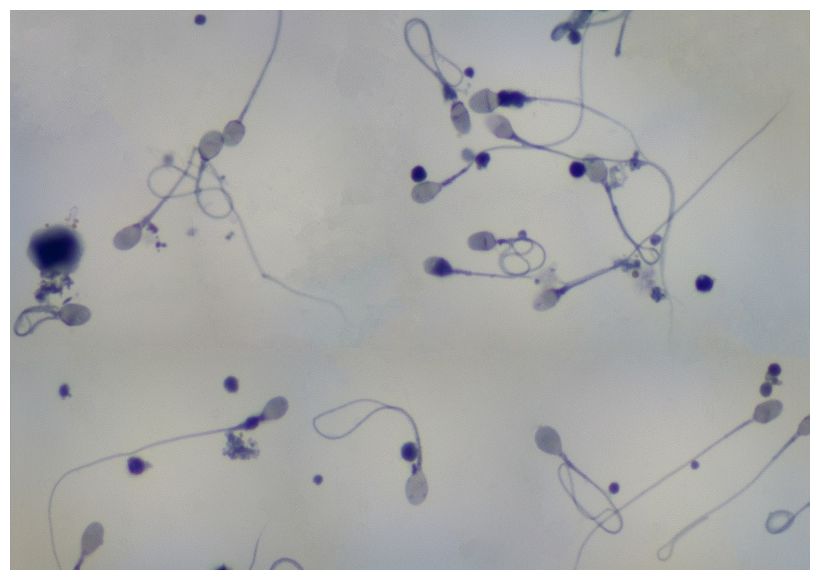
Cell Specialization: The Sperm Cell
The sperm cell is one of the most unique cells the human anatomy and physiology can display, since it reproduces life for generations to come. The sperm cell contains the structural components of a head, a mid piece, and a tail. Sperm cells are located in the testicular glands that are below the penis, and can have over between forty million and 1.2 billion cells per ejaculation. (www.livescience.com)
In a single sperm cell, there are two main organelles similar to that of an eukaryotic cell. The obvious one would be a nucleus, which is present in all living organisms. The mitochondria would be the other similar organelle, since ATP is needed to produce energy to help the sperm travel.
The main function of a sperm cell is to carry the male genes and the 24 chromosomes to the female egg. It is then the sperm's physiology to deplete the outer layer of the egg with the acrosome and fertilize the egg. Sperm cells specialize in carrying genes and chromosomes along with reproducing to help create the generations of today for a brighter tomorrow.
Although sperm proves as a functional cells, they are not a tissue. A tissue is defined as cells that work together in functional units. However, a sperm cell is a haploid, which means its a single cell rather than cells connected to each other in a cell tissue. Since sperm cells work individually instead as a unit, they are rather individual cells than tissues.


 http://myivfblessings.com/wp-content/uploads/2012/10/Blue-image-sperm-cell-egg.jpghttp://alevelnotes.com/content_images/i87_04b_sperm_cell.jpg
http://www.sott.net/image/s5/108406/full/sperm.jpg
In a single sperm cell, there are two main organelles similar to that of an eukaryotic cell. The obvious one would be a nucleus, which is present in all living organisms. The mitochondria would be the other similar organelle, since ATP is needed to produce energy to help the sperm travel.
The main function of a sperm cell is to carry the male genes and the 24 chromosomes to the female egg. It is then the sperm's physiology to deplete the outer layer of the egg with the acrosome and fertilize the egg. Sperm cells specialize in carrying genes and chromosomes along with reproducing to help create the generations of today for a brighter tomorrow.
Although sperm proves as a functional cells, they are not a tissue. A tissue is defined as cells that work together in functional units. However, a sperm cell is a haploid, which means its a single cell rather than cells connected to each other in a cell tissue. Since sperm cells work individually instead as a unit, they are rather individual cells than tissues.


http://www.sott.net/image/s5/108406/full/sperm.jpg
Thursday, September 1, 2016
Hana the Banana Autopsy
In our autopsy lab, we were given the body of Hana the Banana. Known for her nutritious benefits, it was surprising that anyone in the Anatomy and/or Physiology community would cause such harm to Hana. It was up to us pathologists to determine the cause of Hana's death and any reasonable motives that could be involved.
Our first view of Hana was the anterior (front) or ventral of her body. Amongst initial review, we had noticed multiple slits, lacerations, and puncture wounds throughout the body. The most notable of these injuries were a group of puncture wounds (similar to that of stab wounds) about four centimeters inferior of the mouth. We also noticed two round puncture wounds of the anterior part of the body. One puncture wound that created a see through hole of the body inferior of the "stab wounds", and one puncture superior of the "stab wounds". There were also multiple lacerations, the most notable one approximately being 0.2 centimeters lateral of the left eye.
We then transitioned to the posterior (back) or dorsal view of the subject. Despite having the see through puncture wound, most of the other notable trauma on the body were lacerations from the anterior. The only not being a continuation was biggest laceration of the posterior, which was approximately 5.5 centimeters superior of the puncture wound.
It was then time to start the internal examination of the body's internal contents. After performing the procedure, we were soon exposed to two sagittal views of Hana's internal contents. In the first view, we examined two lacerations, both of which were right lateral of the midline. We also noticed two bruises inside the contents; one of them being superior of the laceration while the other bruise was left medial of another laceration. The second sagittal view revealed a single laceration lateral left of the midline along with a puncture wound right medial of the midline. There was a bruise superior of the puncture wound, along with an unknown solid object superior to that same bruise.
Although there can be many theories of how Hana the Banana became deceased, I developed a hypothesis of how she exactly died by what and from whom. Hana the Banana was murdered by a firearm and a sharp object all due to Mr. Orre. Since Hana has been seen before squatting and lifting heavier weights than Orre, he could not dare to lose his reputation as the ultimate weightlifter in the Anatomy and/or Physiology community. The only way to establish himself as the dominant figure was outing Hana once and for all. After meeting her all by herself at her cabana, Mr. Orre began advancing to Hana with a knife. However, Hana had resisted such attack, rebelling against Mr. Orre and his sharp object. At first, Mr. Orre lost his sharp object from Hana in which he punched Hana twice, leaving her two internal bruises that would weaken her. He then retrieved his knife while Hana was stunned, and began stabbing and slashing anywhere that would harm her life and lifting technique. After multiple lacerations, Mr. Orre realized that based off her injuries, it would take Hana too long to bleed out and die. He then retrieved his firearm, and shot Hana twice from point blank range. One shot pierced the body entirely, while the other shot's bullet was stuck internally, explaining the unknown, solid object. Both shots quickened Hana's death, allowing him to go to Crossfit right on time. Mr. Orre would then hand deceased Hana to the Anatomy class, in hopes that they would dissect it and destroy any remaining evidence that could have harmed him. In the end however, we were able to expose Mr. Orre for being the terrible monster he is in killing Hana the Banana, a long beloved member of the community whose legacy shall live on.


Our first view of Hana was the anterior (front) or ventral of her body. Amongst initial review, we had noticed multiple slits, lacerations, and puncture wounds throughout the body. The most notable of these injuries were a group of puncture wounds (similar to that of stab wounds) about four centimeters inferior of the mouth. We also noticed two round puncture wounds of the anterior part of the body. One puncture wound that created a see through hole of the body inferior of the "stab wounds", and one puncture superior of the "stab wounds". There were also multiple lacerations, the most notable one approximately being 0.2 centimeters lateral of the left eye.
We then transitioned to the posterior (back) or dorsal view of the subject. Despite having the see through puncture wound, most of the other notable trauma on the body were lacerations from the anterior. The only not being a continuation was biggest laceration of the posterior, which was approximately 5.5 centimeters superior of the puncture wound.
It was then time to start the internal examination of the body's internal contents. After performing the procedure, we were soon exposed to two sagittal views of Hana's internal contents. In the first view, we examined two lacerations, both of which were right lateral of the midline. We also noticed two bruises inside the contents; one of them being superior of the laceration while the other bruise was left medial of another laceration. The second sagittal view revealed a single laceration lateral left of the midline along with a puncture wound right medial of the midline. There was a bruise superior of the puncture wound, along with an unknown solid object superior to that same bruise.
Although there can be many theories of how Hana the Banana became deceased, I developed a hypothesis of how she exactly died by what and from whom. Hana the Banana was murdered by a firearm and a sharp object all due to Mr. Orre. Since Hana has been seen before squatting and lifting heavier weights than Orre, he could not dare to lose his reputation as the ultimate weightlifter in the Anatomy and/or Physiology community. The only way to establish himself as the dominant figure was outing Hana once and for all. After meeting her all by herself at her cabana, Mr. Orre began advancing to Hana with a knife. However, Hana had resisted such attack, rebelling against Mr. Orre and his sharp object. At first, Mr. Orre lost his sharp object from Hana in which he punched Hana twice, leaving her two internal bruises that would weaken her. He then retrieved his knife while Hana was stunned, and began stabbing and slashing anywhere that would harm her life and lifting technique. After multiple lacerations, Mr. Orre realized that based off her injuries, it would take Hana too long to bleed out and die. He then retrieved his firearm, and shot Hana twice from point blank range. One shot pierced the body entirely, while the other shot's bullet was stuck internally, explaining the unknown, solid object. Both shots quickened Hana's death, allowing him to go to Crossfit right on time. Mr. Orre would then hand deceased Hana to the Anatomy class, in hopes that they would dissect it and destroy any remaining evidence that could have harmed him. In the end however, we were able to expose Mr. Orre for being the terrible monster he is in killing Hana the Banana, a long beloved member of the community whose legacy shall live on.


Subscribe to:
Comments (Atom)