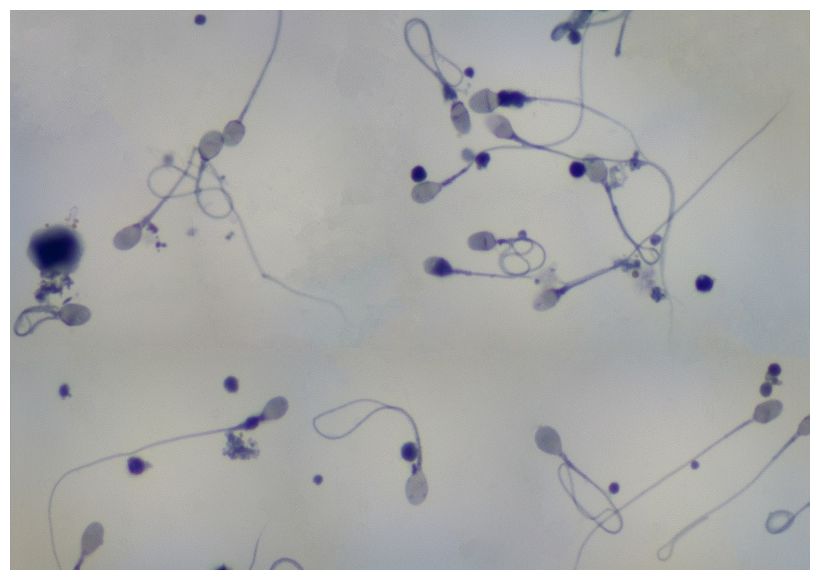
In a single sperm cell, there are two main organelles similar to that of an eukaryotic cell. The obvious one would be a nucleus, which is present in all living organisms. The mitochondria would be the other similar organelle, since ATP is needed to produce energy to help the sperm travel.
The main function of a sperm cell is to carry the male genes and the 24 chromosomes to the female egg. It is then the sperm's physiology to deplete the outer layer of the egg with the acrosome and fertilize the egg. Sperm cells specialize in carrying genes and chromosomes along with reproducing to help create the generations of today for a brighter tomorrow.
Although sperm proves as a functional cells, they are not a tissue. A tissue is defined as cells that work together in functional units. However, a sperm cell is a haploid, which means its a single cell rather than cells connected to each other in a cell tissue. Since sperm cells work individually instead as a unit, they are rather individual cells than tissues.


http://www.sott.net/image/s5/108406/full/sperm.jpg


No comments:
Post a Comment